
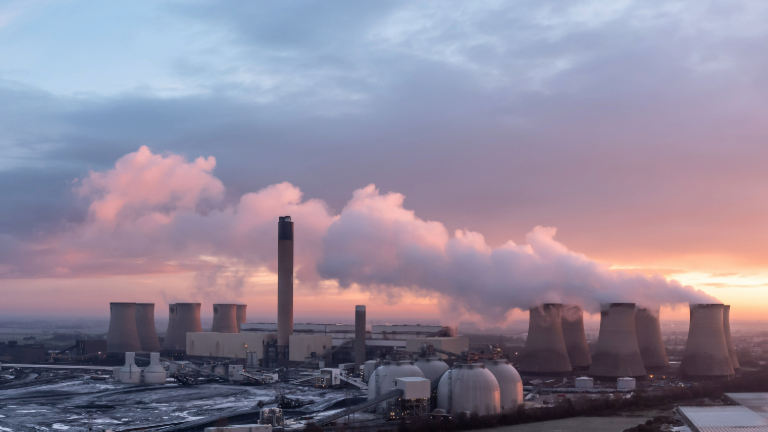
Decarbonisation requires a differentiated approach. Among the options available, Carbon Capture and Utilisation will play a significant role in reaching the world’s net-zero targets, especially for heavy industry. Remediiate offers a commercially ready solution for CCU that delivers value to upstream emitters and profit to downstream consumers.
Carbon capture and utilisation solutions for heavy industry have started to garner significant attention. What role can they play in a differentiated carbon abatement strategy?
The race towards carbon neutrality is a global challenge to assure our sustainable future. But, at the same time, the technologies involved offer huge opportunity for economic growth, making decarbonisation a social, cultural, and economic imperative. Governments around the world are also acutely aware of the need for energy security and, to a certain extent, energy self-reliance.
Climate neutral by mid 21st Century
According to the Paris Agreement in 2015, countries are required to set emission reduction targets and work together to adapt to climate impacts. The goal is to reach a climate-neutral planet by mid-century. Since then, net zero targets cover 80% of global technologies, with clean energy technologies expanding rapidly, particularly in Asia Pacific. But, of course, there are still significant challenges ahead.
There are multiple ways these challenges are being faced. McKinsey, for example, lists nine key technologies that will help us successfully make the energy transition:
- Renewables – Projected abatement = 11 gigatonnes (GT) of CO2
- Electric vehicles – 3 GT
- Nuclear – 2 GT
- Energy storage – 2 GT
- CCUS (Carbon Capture, Utilisation, and Storage) and Carbon Removal – 2GT
- Sustainable fuels – 1GT
- Circular technologies – 3GT
- Hydrogen – 3GT
- Electrified heat – 1GT
Between them, McKinsey believes that they can reduce emissions by 80%, which in turn will deliver energy security. Of course, we all yearn for a sustainable future, but the economic benefits of such technologies are not lost.
For example, McKinsey estimates that solar technologies and EV batteries contributed $1 trillion revenue to China in 2024.
In Europe, meanwhile, wind energy raised $33 billion in capital in the same year, while governments around the world see the social and economic opportunity in clean energy sources.
A differentiated approach to decarbonisation
While McKinsey (and others) reckon that clean energy is expected to play the dominant role in reducing emissions and keeping climate warming below the 2°C target, Carbon Capture, Utilisation and Storage (CCUS) also has a significant part to play. As such, CCUS should be considered as part of a differentiated approach.
CCUS is a broad category that encompasses different approaches to carbon capture. It covers a set of applications that either capture, store, or convert CO2 into other substances or materials. As such, it includes approaches that seek to:
- Capture carbon from large industrial facilities or power generators
- Retrofit solutions to existing infrastructure, leaving the legacy components in place
- Target major sources of emissions
While many are investing in carbon storage as a solution, utilisation is also gaining considerable attention. CCU “refers to a range of applications through which CO2 is captured and used either directly (i.e. not chemically altered) or indirectly (i.e. transformed) in various products.” (source: International Energy Agency).
Commercially ready CCU – in production today
And that’s our focus at Remediiate. We are pioneers in CCU, having developed a complete, integrated solution that is commercially ready for Scope 1 CO2 emission abatement – at source.
Through our industrial-scale approach, we enable the utilisation of carbon emissions from heavy industrial emitters through photosynthesis to fuel the growth of micro algae – with a production site already deployed and in operation at a commercial emitter’s facilities.
Heavy industries, or ‘hard-to-abate’ industries include aerospace, shipbuilding, mining, chemical production, steel and cement production, oil and gas exploration, refining, and many more.
According to the World Economic Forum, for example, aviation, shipping, trucking, aluminium, cement and concrete, and steel currently account for around 25% of global greenhouse gas emissions, which could rise to 50% by 2050 if left unchecked.
Likewise, the U.S. Environmental Protection Agency (EPA) estimates that industry contributes 30% of the country’s greenhouse gas emissions – second only to commercial and residential energy use at 31%.
The challenges for heavy industry – how CCU can help
Heavy industry has a unique set of challenges. It often requires significant amounts of energy in the form of high temperatures required for manufacturing or refining or processing – for example, the manufacture of cement creates large volumes of CO2. The slim profit margins also make it difficult to transition to a low-carbon economy.
That’s where our technology delivers immediate benefits. We offer the first commercially available CCU solution that has been independently proven at scale.
It enables you to capture emissions at source and comply with new legislation intended to enforce abatement programmes and emission reduction while delivering a valuable product to downstream consumers.
So, if you are reviewing your approaches to carbon abatement, CCU should be one of the tactics you consider. To understand how our solution can help, get in touch and let’s start a conversation.