
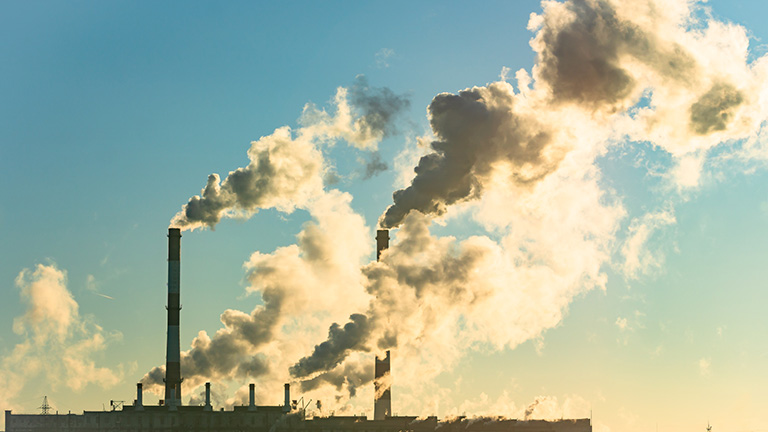
Yes, we need to get rid of as much CO₂ as we can. But we don’t need to just bury it – we can capture it and drive profitable business opportunities.
A promising way to look at a previously intractable problem
Though a crucial component of the carbon cycle, CO₂ has emerged as a major GHG (greenhouse gas). Without question, the world therefore needs CCS, carbon capture and storage. But an interesting question arises: currently, all that captured CO₂ is to be permanently stored—typically underground, on either land or sea (North Sea sandstone being a possible candidate, and other European sites are just now beginning to open up). What if we could do something more than just store it, though?
The current plan, as stated, is just to sequester. Once an emitted gas from an industrial or manufacturing process is captured, it is typically separated into different elements, with the carbon dioxide element compressed and transported to a site where it is injected into geological formations deep (800 metres) underground to keep it in a dense, fluid state.
As it stands, we don’t have a huge amount of practical experience with CCS. The International Energy Agency (IEA) estimates that as of the first quarter of 2025, there was a mere 50 million tonnes (Mt) of carbon dioxide capture and storage capacity in operation, for example.
However, the same body estimates that within four years, that could be more like 430 Mt CO2 per year, based on its database of projects. In the UK alone, some £21.7 billion has been earmarked for carbon capture and storage over the next 25 years.
But the next step beyond locking that CO₂ away long-term is to see if it could be transformed into something useful for the planet—ideally, a product that could also be commercially positive for the emitter, too.
As it stands, a lot of CCS is a one-way ticket underground; if we use the carbon in some way that still removes its danger as a GHG, we end up more in the world of CCU, carbon capture and utilisation.
As awareness of the climate crisis rises, consumers say they are willing to pay more for sustainably sourced ingredients–which makes all this very worthwhile investigating if your CCU work could end up producing something you or a partner could market.
Enter the carbon capture ‘dragon’
Microalgae—which we use as the main driver of our CCU process—are rich in omega-3 fatty acids, proteins, antioxidants, vitamins, and other bioactive compounds, making them highly desirable in health-oriented products—and so is a key ‘nutraceutical’, as in a product derived from food sources that provides extra health benefits beyond basic nutrition and could help prevent or treat diseases.
An example is transforming what comes out of a chimney to feed this ‘green gold’ and turn into a substance people would want to pay for is phycocyanin. A blue pigment that can be extracted from the cultivation of microalgae + wastewater, phycocyanin is used in everything from medicine, as it has some cancer properties (it’s been found to prevent cell growth) to food applications as a natural blue food colouring. It’s been estimated that the phycocyanin market could grow to $276 million by 2030, for example.
In fact, there are many realistic and potentially highly profitable products that could come from capturing carbon, from biofuels, chemicals, materials, agriculture, and animal feed.
Let’s just take the latter: it is possible to use your carbon offload to create a microalgae-fed biomass rich in protein, fats, vitamins, and minerals that can then be processed or formulated into animal feed ingredients for livestock, poultry, and even aquaculture.
Then there are carbon-derived biofuels, where there are two possible routes of travel that can either give you biodiesel via a process called transesterification, or bio-oil, bioethanol, bio-butanol, and bio-hydrogen, which can all come from things like gasification, pyrolysis, and fermentation.
A reproducible and extendable industrial-scientific process
Again, this is a significant market—the global algae biofuel market is projected to reach $17.94 billion by 2030. The takeaway must be that there are many things we can do with captured CO₂ beyond sealing it up and putting it out of sight—things that could help you financially.
And we know this is real.
As a company, Remediiate has already commenced a major undertaking with one of the world’s biggest makers of complete feed solutions to the (organic) livestock farming industry, ForFarmers—which wants to work with us to utilise our proprietary methodology and turn factory smoke into microalgae to turn 2 tonnes of 𝐶𝑂2 into 1 tonne of nutritious animal feed, while also releasing 1 tonne of oxygen.
The good news is that because our process is reproducible (TRL8-ready) and easily tailored to deliver different outcomes, we have the technology to work with you and easily extract any of the other many profitable CCUS by-products now coming on-line.
Talk to us today if you’d like to see how – or would like to visit our plant!