
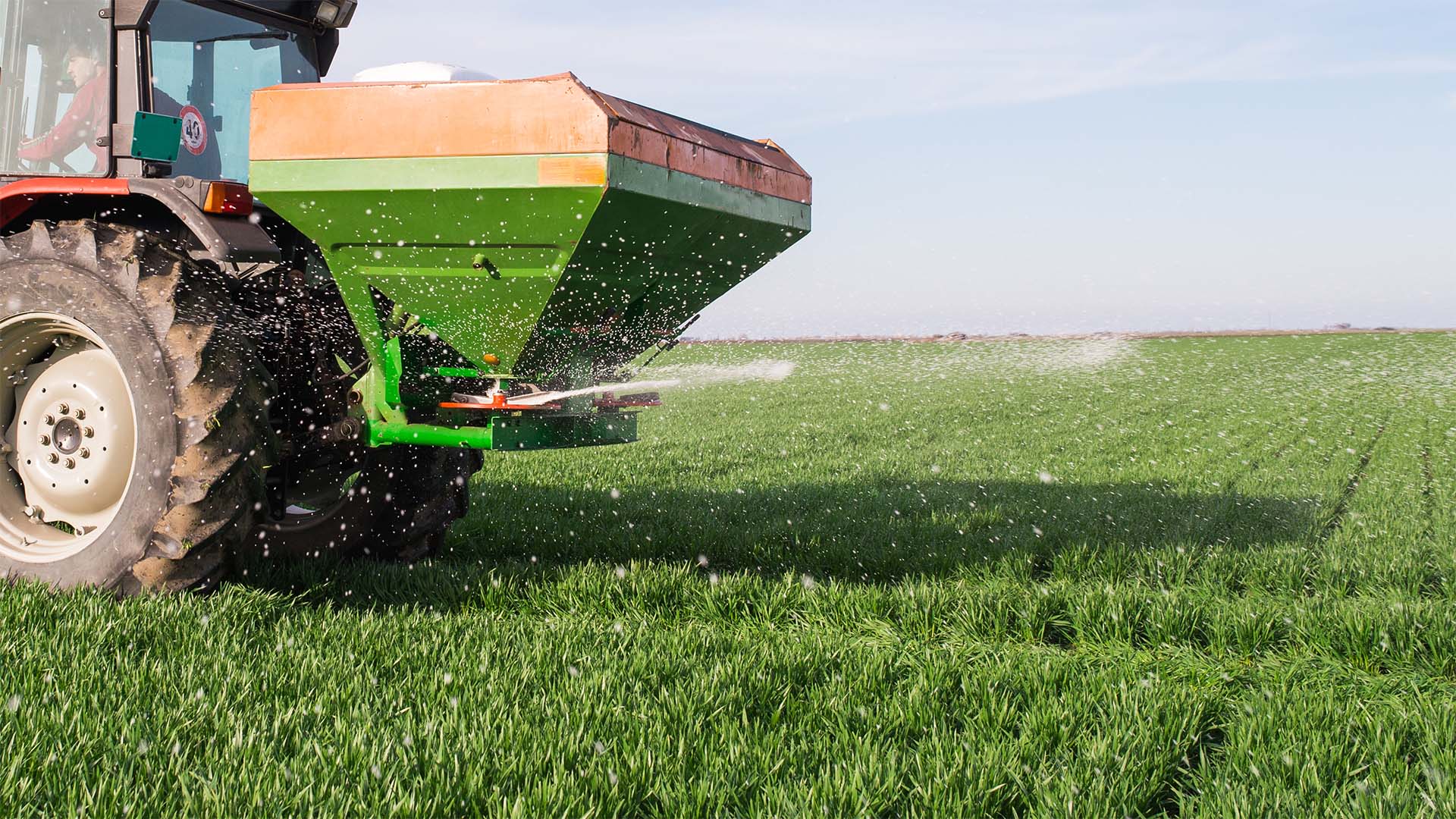
Here’s the good news about the global fertiliser market: global fertiliser trade has largely adapted to the disruption caused by the ongoing Iran War.
But here’s the bad news: urea (the world’s most widely used nitrogen fertiliser) prices were still around 70% higher year-on-year in Q2 2026…which means that, for farmers in countries dependent on imports, price and affordability could now become a real issue for the world’s food growers.
Which begs the question: if fertiliser is fundamental to feeding the world, should we really be comfortable with a system so exposed to energy shocks, geopolitical disruption and volatile international markets?
At least a few players have started to quietly answer that on their own: alternative fertiliser production is moving from an environmental ‘nice to have’ and more to being a way to make the market more resilient.
Which could spell opportunity for a completely unexpected source for other options: CCU, carbon capture and utilisation. Let’s see how.
Biomass to biostimulant
Depending on how the market is defined, the global fertiliser industry is at least a $150bn market, with nitrogen fertilisers such as urea accounting for a substantial share.
So, even without shocks like problems around the Gulf, new ways to enter that market are always of at least potential interest to investors and innovators.
As stated, one emerging possibility is to use microalgae as biological carbon-conversion systems. These microscopic organisms use photosynthesis to consume CO₂ as they grow, producing biomass that contains nutrients and other compounds with potential value in agriculture. That biomass could, in turn, be processed and applied as a biofertiliser or biostimulant.
And that’s an idea that could help with two of the major challenges facing the agricultural sector: reducing the environmental impact of fertiliser production while finding productive uses for carbon that would otherwise be literally waste gas.
Recent research suggests that this is more than a theoretical proposition. A 2025 review in the Chemical Engineering Journal, to take just one example, describes microalgae-driven CO₂ capture and biofertiliser production as a potential circular-economy pathway—highlighting the hugely useful ability of algae to convert captured carbon into biomass that can subsequently support soil fertility and plant growth.
Turning carbon into agricultural value
Microalgae are particularly interesting because they can grow rapidly and use CO₂ as a carbon source. Unlike conventional crops, they can also be cultivated on non-arable land—and, under appropriate conditions, can make use of wastewater or other nutrient-rich streams.
That opens up the possibility of designing systems in which the algae are not simply fed with commercially sourced inputs but where CO₂ from an industrial source could be combined with recovered nitrogen, phosphorus and other nutrients from waste streams to produce biomass.
Even better, the agricultural value of the algae does not necessarily come solely from their nitrogen, phosphorus or potassium content; recent research also points to potential benefits from organic matter, micronutrients, plant-growth-promoting compounds and interactions with soil microbial communities. A 2025 look at the problem in Frontiers in Plant Science, for example, highlights the potential of microalgae and cyanobacteria as biofertilisers and biostimulants, including roles in nutrient mobilisation and plant stress resilience.
Translation: algal products could potentially complement rather than simply replace conventional mineral fertilisers—opening new markets and uses that are bound to grow over time as we look for ways to minimise things like potential Middle Eastern supply issues.
The critical question: can this easily be monetised?
The environmental logic is attractive, but there are some challenges around scaling all this. The economics are a tad more complicated. A fairly objective look at all this published in Environmental Technology & Innovation concluded, for instance, that high cultivation costs and scalability remain major barriers to the wider adoption of algal biofertilisers.
BUT the same piece also highlighted wastewater, agricultural waste and inexpensive nutrient sources as potential routes towards lower-cost production. If the algae require large quantities of externally produced nutrients, fresh water and energy, the environmental and economic case can quickly weaken…unless you have optimised the process, as we think we have.
For example, a 2025 study in Bioresource Technology examined microalgae grown in wastewater as a biofertiliser for lettuce. Its verdict: a microalgae-based approach had the lowest environmental impacts among the fertilisation options assessed, while the economic analysis indicated that it could be competitive with conventional fertilisation under the conditions studied.
Rather than cultivating algae simply to capture CO₂ direct from the atmosphere, locating production close to concentrated industrial CO₂ sources could provide a more efficient route to carbon utilisation. The proximity of the source, the concentration and purity of the gas, and the timing and consistency of supply all influence the economics.
This is where microalgae could become part of a broader industrial symbiosis: one process supplies CO₂, another supplies nutrients, and agriculture ultimately provides the market for the resulting biomass.
And it’s literally what we do every day.
A new model of carbon-to-crop circularity is in view
Bottom line: the next phase of non-traditional sources of fertiliser must be not about proving that algae can capture CO₂ and more about determining how efficiently they can do it while producing a valuable agricultural product.
That does not mean microalgae will replace conventional fertilisers wholesale, and (alas, at least in the foreseeable future) nor does it mean every source of CO₂ or wastewater will be suitable for algal cultivation.
But the technology could offer something increasingly valuable and commercially attractive as fertiliser gets pricier: a way of turning waste streams into productive inputs while reducing the resource intensity of agriculture.
If CO₂ can be supplied efficiently (and locally), nutrients can be recovered rather than purchased, water can be recycled, energy requirements can be reduced, and the resulting biomass can deliver consistent value to crops, then microalgae could move beyond their role as a carbon-capture technology.
They could become part of a new model of carbon-to-crop circularity with a virtuous cycle of capturing carbon, recovering nutrients and returning biological value to the agricultural system.
The challenge now is making the biology work at the right cost. But the important thing about this discussion is that this isn’t the future. This is happening now—and can be a project you could start today, by working with an expert like the UK’s own Remediiate (see here, for example).
So, why not send that exploratory email and open your own carbon-derived fertiliser profit centre?