
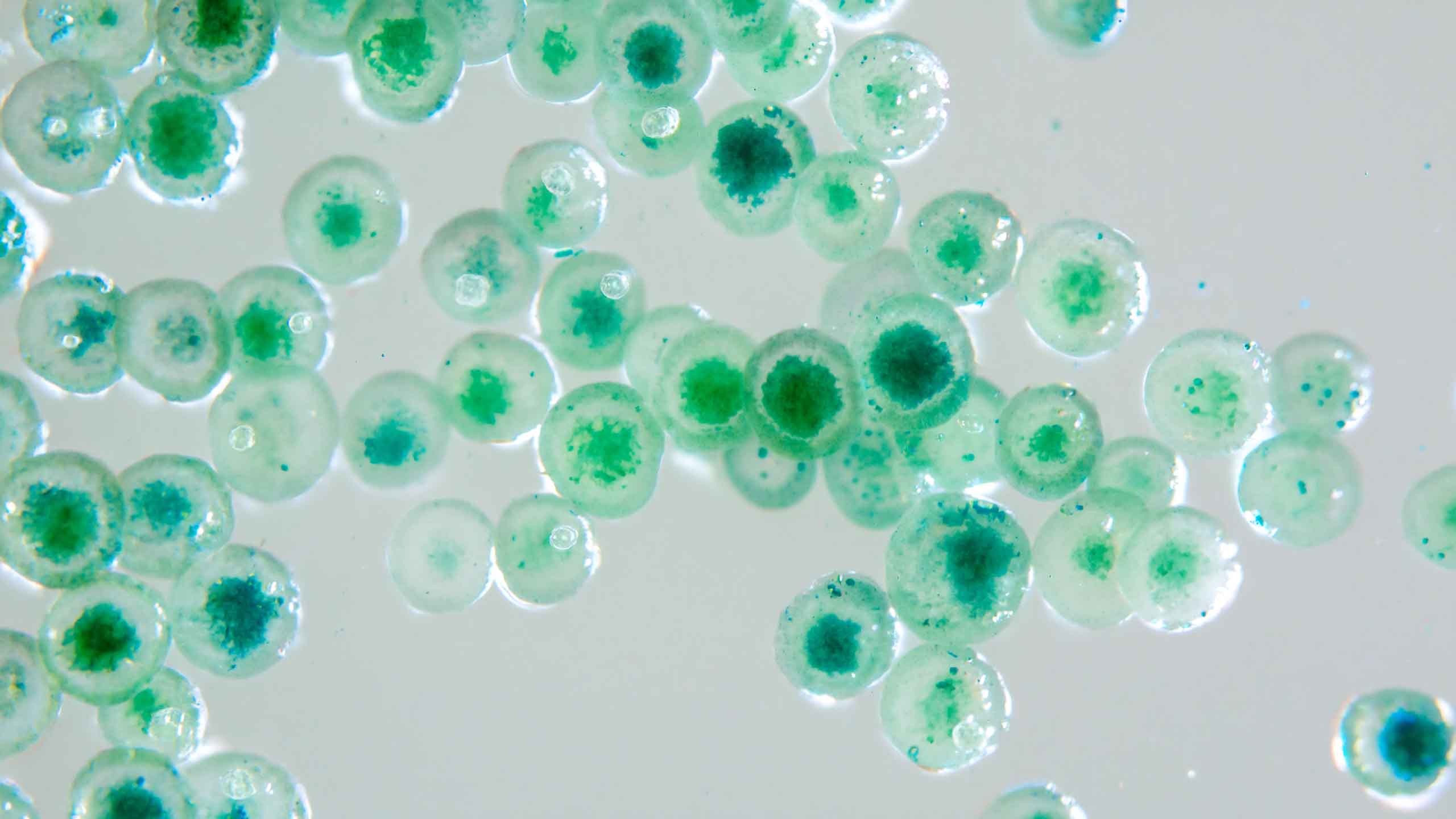
Can a blooming natural resource boost remediation of CO2 from human emissions? Algae possess remarkable abilities to sequester CO2 from the atmosphere – by harnessing these abilities, could we gain a powerful tool to help reduce carbon emissions and tackle climate change? The answer is yes.
A context of both environmental and commercial need
2025 was among the three hottest years on record, while the growing power demands of data centres and cryptocurrencies meant US emissions of greenhouse gases (GHGs) rose for the first time in three years.
As a result, researchers are eagerly seeking solutions that can reduce CO2 emissions so we can combat this pressing issue. Are there ways in which we can balance such negative climate crisis headlines with some more positive news? The answer is: yes. Read on to find out more.
All around us — from our local pond and the oceans, to the driest and hottest deserts — hiding in those modest green or coloured clouds on the surface of still water, lies a powerful natural ally in the fight against GHGs that industrial and agrochemical organisations say could indeed provide just that.
And at a scale that means multiple commercially-sound by-products would also be derived from a simple, natural process—meaning carbon abatement initiatives could provide profitable returns.
And what is this ally? Algae.
Understanding the role of algae in CO2 capture
So, how can algae help? Well, algae constitute a diverse group of photosynthetic organisms – they can be microscopic, single-cellular lifeforms, as well as multi-cellular organisms, which may reach 50m in length. Their dependence on photosynthesis means that they use light, water and carbon dioxide to produce oxygen and biomass.
Classically, they are divided into micro- and macroalgae – and we’re interested in the former, the unicellular variants. It turns out that microalgae are extremely effective at removing CO2 from the environment.
Depending on species and growing conditions, it has been estimated that microalgae can fix up to 10–50 times more CO₂ per hectare than regular terrestrial plants.
In other words, microalgae provide an excellent natural means for capturing carbon: research suggests, in fact, it can absorb an average of 1.8 to 2.0 metric tons of CO₂ absorbed per tonne of dry algal biomass produced.
Microalgae’s potential is not limited to that: they have exceptional growth rates. Some microalgae species, for example, can double their biomass in 24 hours or less, which gives you a carbon capture ally that acts much quicker than the months that conventional crops or the years trees need to ‘come online’.
All of which means that algae are a natural resource that can absorb vast amounts of carbon – but can we apply this processing power to the pressing problem of capturing industrial carbon emissions and reducing their environmental impact in the atmosphere?
Leverage nature to create algae farms
To harness the full potential of microalgae in carbon sequestration and capture, for example, scientists have pioneered the concept of microalgae farms—specialised facilities that support the controlled growth of microalgae and encourage the absorption of CO₂ on a large scale.
By providing things as simple and abundant as sunlight, nutrient-rich water, and regulated CO₂ supplies, then, algae farms can support high-yielding microalgae populations.
All of which means that they can provide a promising resource for carbon remediation, absorbing excess CO2 from the atmosphere — or from sources of emission. But microalgae’s benefits don’t just stop there.
Beyond its eco-friendly potential for CO₂ remediation and sequestration, this 100% natural substance can be cultivated extensively to produce a wide range of sustainable products, including biofuels, food supplements, animal feed, and even cosmetics. As a result, it also holds enormous potential commercial value as a renewable, but value-adding resource in its own right.
Not only can algae provide a wide range of useful products, but by adopting algae cultivation, a wide range of industries can reduce their reliance on fossil fuels – and so minimise CO2 emissions.
What really sets algae apart from other carbon sequestration methods, however, is the remarkable versatility of these organisms. Algae can thrive in a wide range of environments – freshwater, seawater – even wastewater.
This adaptability gives algae the potential to be used for carbon emission reduction in multiple sectors – including power plants, manufacturing, wastewater treatment plans and more. By incorporating algae-based technologies, these industries can significantly reduce their carbon footprints.
Can a microalgae-based approach help you?
While microalgae-based carbon sequestration holds immense promise, there are still challenges, which include practical scaling up of microalgae farms to industrial capacities, fully optimising growth conditions, and addressing potential ecological concerns require continued research and development.
Summing up, in the global fight against climate change, given its unique ability to absorb and convert CO₂ into valuable biomass microalgae is emerging as a hugely promising tool for carbon sequestration and CO₂ remediation.
By investing in algae cultivation at scale and adopting algae-based technologies, we can harness the natural capabilities of these fascinating organisms to effectively combat climate change and secure a greener future.
Want to know more? Get in touch to find out how Remediiate has a market-ready solution that brings industrial scale to algae cultivation.